Wedding Photographer: Documentary vs. Traditional Styles Compared
Picture this: you’ve just gotten engaged, you’re scrolling through Instagram, and suddenly you realize there are about a million different ways a wedding photographer can capture your big day. Overwhelming, right?
Here’s the thing, choosing the right photography style is one of the most important decisions you’ll make for your wedding. After all, your photos are what you’ll have long after the cake is eaten and the flowers have wilted. But if terms like “documentary” and “traditional” photography have you scratching your head, you’re definitely not alone.
In this post, we’re breaking down the two most popular wedding photography styles in a way that actually makes sense for beginners. You’ll learn what each style looks and feels like, what kind of couple each one suits best, and how to figure out which approach is right for your wedding day vision. By the time you finish reading, you’ll feel confident talking to any wedding photographer about exactly what you want. No confusing jargon, no overwhelm, just clear and simple guidance to help you make the best choice for your special day.
What Is Documentary Wedding Photography?
At its simplest, documentary wedding photography means your photographer spends the day watching and capturing rather than directing and posing. There are no instructions to “stand here,” no requests to repeat a moment that just happened naturally, and no interruptions during the speeches because the photographer needs a better angle. Instead, they blend into the background and let your day unfold exactly as it would without a camera present. The result is a collection of images that genuinely reflect how your wedding actually felt, rather than how it was staged to look.
Documentary, Reportage, and Photojournalism: Three Names, One Approach
If you have started researching wedding photographers, you have probably come across all three of these terms and wondered whether they mean different things. They do not. Documentary, reportage, and wedding photojournalism all describe the same underlying philosophy: the photographer observes, they do not direct. The different labels come from different creative traditions. Photojournalism has its roots in newspaper media, reportage draws from the European photo-essay tradition, and documentary comes from human-interest filmmaking. In practice, when a photographer uses any of these three terms, they are telling you the same thing: your day will be captured as it happens, without intervention. You can use any of these terms when searching and expect to find photographers working in the same way.
“Candid” Is Not the Same Thing
This is worth paying close attention to, especially if you are new to researching photographers. The word “candid” gets used very loosely, and it can be misleading. Many photographers describe themselves as offering candid coverage while still spending the majority of the day posing couples and directing family groups. In that context, “candid” just means a few relaxed, informal shots slotted in around an otherwise structured shoot. True documentary coverage is a whole-day commitment to non-intervention, from the morning preparations right through to the last dance. As York Place Studios explain in their definitive guide to documentary wedding photography, a genuine documentary photographer will typically spend 90 to 95 percent of the day capturing unposed moments. That is a fundamentally different approach, not a stylistic add-on.
Why So Many Couples Are Choosing This Style Right Now
This is not a niche preference. Zola’s 2026 First Look Report, which surveyed more than 11,500 engaged couples, officially ranked candid, documentary-style photography as “Firmly In” for 2026, with couples consistently prioritising authentic emotion over polished perfection. The trend reflects something broader happening across the wedding industry right now. Couples are rejecting over-edited, heavily staged imagery in favour of photographs that feel honest and personal. The best way to understand what this looks like in practice is to browse real documentary wedding work and notice how different it feels from a traditionally posed gallery.
Nathan Eames of Libra Photographic is a documentary wedding photographer based in Poole, Dorset, working in exactly this way. Covering weddings across Dorset, Hampshire, and the wider South of England, Nathan’s approach is rooted in observation and storytelling. No posing, no interruptions, just an honest record of your day as it genuinely happened.
Documentary Wedding Photography vs. Traditional: What Is the Difference?
Traditional wedding photography puts the photographer firmly in charge. They arrive with a shot list, gather your family into rows, adjust where everyone is standing, and work through combinations until every grouping is ticked off. Think of the images you have probably seen in older wedding albums: everyone lined up, looking at the camera, smiling on cue. That approach has real value. Key moments get covered, family portraits are clean and clear, and nobody is left out of the official record. But what you give up is the unguarded moment. The emotion already happening in the room gets paused while everyone gets into position, and by the time the shutter fires, the feeling has often gone.
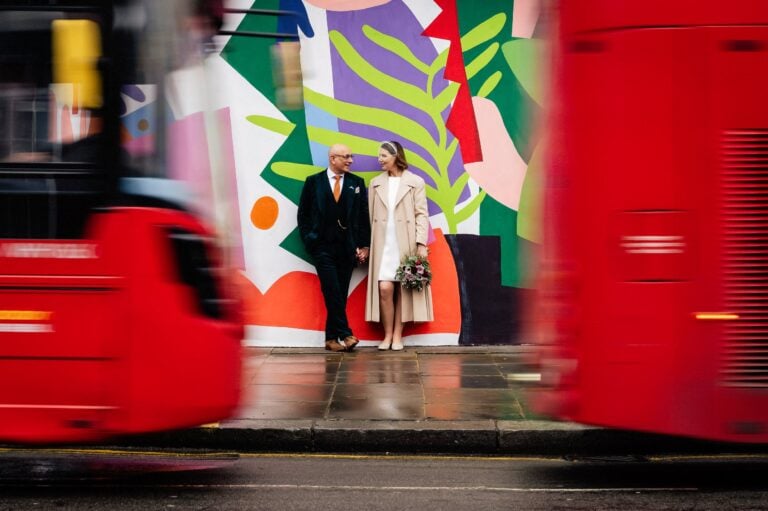
Documentary wedding photography works the other way around entirely. Your photographer stays present throughout the day but works to stay invisible, following the energy already unfolding rather than creating their own. A father’s expression when he sees his daughter for the first time. A hand squeezed quietly before the ceremony begins. Two friends laughing too hard to stand during the speeches. A grandparent watching from across the room during the first dance. None of those moments can be staged. They happen because the people involved forgot the camera was there, and a skilled documentary photographer is already in the right position when they do. As this honest breakdown of wedding photography styles puts it, traditional photography can leave images feeling like “a checklist rather than a memory.”
The practical difference in the resulting galleries is significant. Traditional photographs tend to look polished and composed. Everyone is well-lit, centred, and presentable. Documentary photographs tend to feel alive. They are emotionally specific, tied to the particular people and moments of your wedding rather than a universal template. One style shows you what your wedding looked like. The other shows you what it felt like.
A common misconception is worth addressing here: documentary photography is not the easier option or the lower-effort approach. It actually demands a higher level of skill in certain ways. A photographer working documentarily has to anticipate when a moment is about to happen before it does, read changing light throughout a ten-hour day without stopping to set anything up, and move through a crowded room quietly enough that nobody changes their behaviour. As this comparison of editorial and documentary approaches notes, the absence of an agreed industry language means couples sometimes assume candid photography requires less expertise. It does not. The lack of control is precisely what makes it harder.
You may come across photographers who describe their approach as a hybrid, combining posed portraits with some candid coverage throughout the day. That is a legitimate and popular choice, but it is worth understanding what it actually means in practice. A photographer who spends the majority of the day directing formal groups and portrait sessions, then captures a handful of candid moments in between, is offering a very different experience from a photographer practising true full-day documentary coverage. The distinction matters because every minute spent posing is a minute when the day pauses, and the people involved are performing rather than living it.
The most useful question to ask yourself is this: do you want photographs that show what your wedding looked like, or photographs that show what your wedding felt like? If you have a large family with strong expectations around formal portraits, or you genuinely love a clean and composed aesthetic, a traditional or hybrid approach may suit you well. If you want to pour a drink, be with your people, and trust that the moments worth keeping will be caught without you having to think about it, documentary coverage is likely the better fit. There is no wrong answer. The goal is simply to choose a photographer whose actual method matches the experience you want to have on the day itself.
Why Unposed Wedding Photographs Age Better Than Posed Ones
Something interesting is happening across the wedding industry right now. Couples and photographers alike are pushing back against the heavily styled, over-edited, trend-chasing imagery that dominated wedding albums for much of the last decade. 2026 has been widely described as an “anti-trend” era, with the guiding theme being photography that feels like you, authentic, emotional, and genuinely real. It is a shift that has been building for a while, but it has landed with real force this year.
Why Posed Images Can Start to Feel Dated
Think back to wedding photos from the early 2010s. The heavily desaturated, moody orange-and-teal colour grading. The couple holding hands while walking away from the camera. The elaborate “shoe shot.” The perfectly arranged flat-lay of rings and accessories. At the time, those images felt fresh and modern. Today, they are an unmistakable time capsule of a particular visual moment.
That is the problem with trend-driven photography. When a pose or editing style is popular, it reflects the aesthetics of that year, not the personalities of the two people getting married. Heavily directed shots and fashionable presets have an expiry date built in. Once the trend moves on, the image is left behind with it.
Why Documentary Images Stay Meaningful
Documentary wedding photographs work differently. They are not built around a style or a technique; they are built around a moment. Your grandmother laughing at the best man’s speech. Your partner’s face when you walk into the room. The quiet ten minutes you stole together before the reception. Those things do not become less meaningful because a colour trend has changed. Research has consistently shown that humans are drawn to authenticity and that candid images invite a deeper emotional response than staged ones, precisely because they capture something real rather than something performed.
Couples who revisit documentary albums years later often describe the experience as being transported back to the day. That kind of emotional recall is simply not possible with an image that was constructed around a pose rather than a feeling.
An Approach Recognised at the Highest Level
This is not a niche preference or a fringe style. Olly Knight, UK Wedding Photographer of the Year 2026, has been explicit in championing honest, documentary storytelling as the highest expression of the craft. When the industry’s top award goes to a photographer whose entire philosophy is built around real moments over posed ones, that tells you something important about where the profession has arrived.
The Smartest Long-Term Investment
Here is the practical dimension. Wedding photography is consistently described as the “do not touch” budget category for 2026 couples. Even when trimming costs elsewhere, photography spend is being actively protected. That makes sense when you consider what you are actually paying for: not a product you use once, but a record of one of the most significant days of your life that you will return to for decades. Choosing documentary photography means that investment holds its emotional value for just as long.
How Nathan Works on Your Wedding Day
Nathan arrives early. Not just “a bit before the ceremony” early, but early enough to walk the venue properly, check how the light is falling through the windows, and introduce himself to the people who matter most before anything significant happens. By the time guests start arriving, he has already become part of the furniture. That shift, where someone stops registering you as a stranger and goes back to just being themselves, is where the real photography begins. It cannot be rushed, and it cannot be faked by turning up ten minutes before the first dance.
Reading the Room Before the Moment Arrives
The ceremony, speeches, and first dance all share one thing in common: the best photographs come from being in the right place before the moment happens, not sprinting toward it once it has already started. During a ceremony, Nathan is already watching the parent in the front row whose jaw is tightening slightly, already positioned to catch the groom’s face the instant his partner appears at the door. During speeches, the shot is rarely just the person speaking; it is the couple’s reaction, and capturing that means knowing where to stand before the first joke lands. Why documentary wedding photography matters is precisely this: a photographer embedded in the emotional flow of the day, not observing it from a safe distance.
The Family Group Photograph Question
Here is an honest answer to something many couples feel awkward raising: yes, you can absolutely have a small set of group photographs alongside full documentary coverage, and Nathan handles this regularly. Most couples want perhaps five or six combinations, perhaps immediate family and the wedding party, done efficiently and without it consuming the whole afternoon. The approach is simple. Nathan asks for a short list in advance, keeps the groupings tight, and moves through them with enough warmth that it does not feel like a military drill. Twenty minutes, done well, leaves the rest of the day completely free. The goal is that group shots feel like a small, relaxed chapter within the wider story rather than the dominant event.
Editing That Looks Like Your Day
Nathan’s editing philosophy is straightforward: the finished images should look like the day actually looked, not a stylised interpretation of it. Natural colour, careful exposure, and no heavy orange and teal grades or crushed shadows that make every wedding look like the same Instagram filter was applied. What a documentary wedding photographer does is rooted in capturing what the day felt like, and that principle carries directly into the editing process. If the light in the barn was warm and golden, that warmth should be there. If the morning was cool and grey, that is the honest version of the story.
Invisible by Design
Being unobtrusive on a wedding day is not purely a technical skill; it requires genuine care for the couple’s experience. Nathan’s aim is simple: that your guests finish the day barely aware a photographer was present, and that you feel as though you actually lived your wedding rather than performed it. That starts in the planning conversation, where he takes time to understand what matters to you, what you are nervous about, and what you definitely do not want. It continues on the day in small ways; knowing when to step back, knowing when someone needs a moment without a lens nearby, knowing that the photograph is never more important than the experience itself.
Wedding Albums, Photo Collections, and Ethical Product Choices
When Nathan delivers your wedding photographs, you won’t receive a folder containing every single frame captured throughout the day. What you’ll receive is a curated collection, a carefully edited sequence of images that moves through your wedding from the quiet moments of getting ready right through to the last dances of the evening. This matters more than it might sound. There’s a significant difference between handing someone 800 near-identical frames and presenting 400 images that each earn their place in the story. Editing down takes time and skill, but the result is a collection you can actually sit with, one that has emotional rhythm and narrative shape rather than feeling like a contact sheet.
The Album: Something You Can Actually Hold
Alongside your digital collection, Libra Photographic offers wedding albums built around a classic wooden structure, available with either a linen cover or a vegan-friendly micro leather cover. These aren’t the flimsy consumer photo books you can order from a supermarket app. The construction is designed to last, with lay-flat pages that open fully without a crease running across the middle of your favourite image, and materials chosen with longevity in mind. A sustainable vegan leather wedding album looks and feels every bit as refined as traditional leather; the difference is in the values behind the choice, not the quality of the finish.
Why the Vegan Option Actually Matters
For couples who care about how products are made, the vegan micro leather option isn’t a minor footnote in small print. Gen Z now makes up 51% of engaged couples in 2026, surpassing Millennials for the first time, and for this cohort, ethical product credentials are a genuine purchasing consideration. Choosing a vegan album cover is a small but consistent expression of values, and it’s the kind of detail that aligns with how many modern couples already live. According to predicted wedding album trends for 2025, sustainable and ethical product choices are an identified trend category, not a passing moment. Notably, no local photographer across Dorset or Hampshire currently offers explicitly vegan-friendly album options, making this a meaningful differentiator for eco-conscious couples in the region.
Digital Files Are Not Enough on Their Own
Your digital collection is valuable, but it relies on a chain of technology remaining intact. Hard drives fail; cloud subscriptions get cancelled, forgotten, or shut down by platforms that no longer exist; the photo app you use today may not exist in fifteen years. A bound, printed album exists independently of all of that. It sits on a shelf, requires no password, and doesn’t need a software update. Professional albums use archival-grade materials and high-quality lay-flat construction specifically designed for multi-decade stability. In thirty years, the album is the format most likely to still be in your hands, looking exactly as it did the day it arrived.
Dorset, Hampshire, and South of England Wedding Venues
Nathan is based in Poole, which puts him right in the heart of one of the most beautiful wedding regions in the country. From that base, he works regularly across Dorset and Hampshire, and throughout the wider South of England. If you are planning a wedding further afield but have your heart set on a Dorset or Hampshire venue as your destination, you are very welcome to get in touch. Couples travelling specifically to get married along the Jurassic Coast or in the New Forest are exactly the kind of enquiry Nathan loves to hear from.
If you are still shortlisting venues and are not quite sure where to start, the Libra Photographic wedding venue guide for Dorset and Hampshire is worth bookmarking. It is designed to be a genuinely useful planning tool, not just a photography portfolio dressed up as advice. The goal is to help you find the right venue for your day, which in turn means your photography takes care of itself.
The Kinds of Venues Nathan Photographs
The region has an extraordinary variety of settings. On the coast, venues like Lulworth Castle and The Italian Villa offer that dramatic Jurassic Coast backdrop, with light that shifts beautifully from morning to golden hour. For country house weddings, Mapperton House and Gardens near Beaminster and St Giles House represent the very best of Dorset’s historic estate venues. Barn and barn conversion weddings are equally well catered for, with venues like Sopley Mill and Stockbridge Farm Barn offering warm, relaxed atmospheres. Garden and grounds weddings at places like Athelhampton House, and Hampshire favourites including Pylewell Park and Avington Park, round out a region that really does have something for every couple.
Why a Local Photographer Makes a Difference
Knowing a region is about more than just owning a map. Nathan understands how the afternoon light falls at coastal Dorset venues, how overcast skies can actually work in your favour in this part of the country, and which quiet corners of a venue will give you the most extraordinary photographs. He also has established working relationships with local venue coordinators, which means the day runs more smoothly for everyone involved.
If you are planning your wedding at any of the venues above, or anywhere else across Dorset, Hampshire, or the South of England, Nathan would genuinely love to talk. Get in touch directly and mention your venue from the start.
When Should You Book Your Wedding Photographer?
If you have recently got engaged and are starting to think about your wedding photographer, here is the most important thing to know right now: the couples getting married in 2026 and beyond are booking their suppliers earlier than any previous generation of newlyweds. This is not anecdotal. Industry data consistently points to a clear shift in behaviour, with popular photographers across Dorset and Hampshire filling their diaries significantly further in advance than even a few years ago. Waiting until the venue is booked, the catering is sorted, and the dress is chosen before thinking about photography is a pattern that regularly leaves couples without their first-choice photographer.
How Far Ahead Should You Book?
For weddings at popular venues across Dorset and Hampshire, a booking window of 12 to 18 months ahead has become the standard expectation rather than an early-adopter choice. For peak-season Saturdays, particularly those falling between May and October, the pressure is even greater. An established documentary wedding photographer typically shoots somewhere between 20 and 35 weddings per year. Spread those dates across a limited number of peak Saturdays, and the calendar fills in strict enquiry order with no flexibility to squeeze in an extra booking. Some photographers are already receiving enquiries for 2027 and 2028 dates, which gives a clear sense of how the market has moved.
Why Photography Deserves to Be Booked First
Most wedding suppliers can scale their capacity in some way; a caterer can take on additional staff, a florist can adjust their schedule. A photographer cannot be in two places at once, and that single-date constraint makes availability genuinely finite. More importantly, your wedding photographs are one of the very few things you will actually live with every day for the rest of your life. The venue gets visited once. The cake gets eaten. The flowers fade. The images stay. That is a good reason to prioritise finding the right photographer early, rather than treating it as something to confirm once everything else is in place.
Enquiring Early Does Not Mean Committing Immediately
If booking 12 months ahead feels like a big step when you are still figuring out the shape of your day, that is completely understandable. But there is a useful distinction between making an initial enquiry and signing a contract. Reaching out to Nathan costs nothing and requires nothing more than a date, a venue, and a quick question about availability. A short discovery call follows from there, and its only purpose is to work out whether his approach feels right for you. There is no pressure, no sales pitch, and no obligation. It simply answers the question early, while the options are still open.
If you are already closer to your date and wondering whether it is too late to enquire, it is always worth asking. Nathan will give you an honest answer about availability and, if your date is already taken, he would rather tell you clearly so you can keep looking than leave you uncertain.
What Does Wedding Photography in Dorset Cost?
Pricing is usually one of the first things couples want to understand, and it is genuinely frustrating when a photographer’s website gives you nothing to work with. No figures, no starting points, no sense of what you are getting into. That absence of information does not just leave you in the dark; it creates real friction at the decision stage and often sends couples elsewhere. So here is an honest overview of what wedding photography in Dorset actually costs in 2026.
The Dorset market spans a surprisingly wide range. At the budget floor, you will find photographers offering full-day coverage from around £650 while still building their portfolios. At the mid-range, established photographers with consistent experience typically sit between £1,250 and £2,000 for full-day coverage. Experienced documentary photographers working with premium products and editorial depth start from around £2,500 to £3,000 and upward. The UK national average sits between £1,500 and £2,500, with the South and South East trending toward the higher end of that bracket.
Several variables move a quote up or down. Coverage duration matters most; an 8 to 10 hour day costs more than a 6 hour package. Adding a second photographer is worth considering for larger weddings and adds to the overall investment. Travel, particularly for venues requiring overnight stays or long distances, is another factor. Album inclusion is worth watching closely; some photographers price low at the base level but add £400 to £600 for albums separately, so always ask what is actually included.
Photography consistently sits at the top of the “do not cut” list for couples planning 2026 weddings. Flowers are gone by midnight. Food is eaten. The photographs are still there on your 25th anniversary, and every year they become more valuable, not less.
Nathan provides clear, itemised pricing with no hidden extras. Get in touch directly for a personalised quote that reflects your specific day, venue, and coverage needs.
Finding the Right Wedding Photographer for Your Day
At the heart of this comparison is a simple question: when you look at your wedding photographs in twenty years, what do you want to feel? Traditional photography gives you a directed, polished record. Faces are arranged, smiles are prepared, and the results are clean and clear. Documentary photography gives you something different. It gives you the truth of the day, the glance, the laugh that surprised you, the moment nobody planned. Neither approach is wrong, but only one of them is yours.
The 2026 Anti-Trend movement has given documentary photography a lot of attention recently, but it would be a mistake to treat it as a trend to ride. Documentary wedding photography was never chasing fashion. It was simply committed to honesty before honesty became popular. That commitment is precisely why it will still feel right in thirty years, long after whatever the next styled aesthetic turns out to be has dated.
If you are beginning your search, here are three practical steps worth taking before you shortlist anyone. First, decide how you want your day to feel on film, not just how you want it to look. Second, ask to see full wedding galleries, not just a photographer’s best twelve shots. A portfolio that holds up across an entire day tells you far more than a handful of standout images. Third, book earlier than feels necessary. The photographers whose work genuinely moves you tend to have less availability than you expect.
If Nathan’s approach sounds like the right fit, you are welcome to browse the portfolio at Libra Photographic and get in touch with any questions. There is no pressure and no sales pitch, just an honest conversation about whether it makes sense to work together.
The best wedding photographer is not the most decorated or the most expensive. It is the one whose photographs stop you mid-scroll, and whose presence on your wedding day you will barely register.
Conclusion
Choosing between documentary and traditional wedding photography does not have to feel overwhelming. Here are your key takeaways: documentary style captures raw, unscripted moments as they naturally unfold, while traditional photography delivers polished, posed portraits that stand the test of time. Neither style is better than the other; the right choice simply depends on your personality, wedding vision, and how you want to remember your day. Many couples even find that a hybrid approach gives them the best of both worlds.
Now that you speak the language, you are ready to take action. Start browsing photographer portfolios with fresh eyes, and schedule consultations with your top picks. Come prepared with questions, share your vision confidently, and trust your instincts.
Your wedding photos will tell your unique love story for generations. Make sure they are told exactly the way you want.